

BJJ Sportswear for Training and Competition
The right BJJ gi size fits your build without restricting movement or leaving excess fabric to manage during training. Choose bjj sportswear by comparing your height and weight with the brand’s size chart, then consider whether the cut suits you.
Finding the right fit takes more than choosing a standard adult size. Men’s, women’s, and kids’ gis may differ in cut and sizing, while training and competition gear serve different needs.
This guide explains how to choose a gi size, compare training and competition equipment, and select options for adults and children. You’ll also learn how traditional gi training differs from no-gi practice, so you can focus on the right uniform and gear for each session.
Key Takeaways
- Compare gi and no-gi equipment by training format, then account for competition requirements before choosing a setup.
- Use your measurements and the size chart to narrow the fit, then consider cut, movement, and whether the gi is for an adult or child.
- Separate training preferences from competition needs when weighing fabric, color, and uniform standards.
- Build a simple gear-care routine and avoid sharing personal equipment to support cleaner, more consistent training habits.
Training and competition gear
Choose gear by training format first. No-gi jiu-jitsu is practiced without the traditional gi or kimono. For these sessions, compare rashguards, spats, and shorts. Check that the fabric allows full movement through hip turns, guard work, and standing drills. Before training, test the fit with a deep squat and a full arm reach.
Rashguards cover the upper body, while spats cover the legs. Choose a combination that stays in place as you move and feels comfortable against your skin. Shorts may also be worn for no-gi sessions, depending on the training setup. Avoid loose details that could catch during grappling. For competition, IBJJF no-gi divisions require rashguards in rank colors, so match the garment to your division’s requirements.
Gi training uses a jacket, trousers, and belt. No-gi gear has a different clothing setup, so one outfit may not suit both formats. Organize your kit by session: keep the gi uniform ready for gi practice, and pack rashguards, spats, or shorts for no-gi. This makes packing and changing more straightforward.
For gear you’ll use repeatedly, inspect seams, hems, and closures before choosing. Check that stitching lies flat and the fabric does not restrict shoulder rotation or leg movement. A quick movement test can reveal pulling at the knees, hips, or underarms. These fit checks help confirm mobility, beyond how the gear looks.
Competition adds a standards check. The International Brazilian Jiu-Jitsu Federation sets strict standards and uniform regulations for IBJJF tournaments. Competition gis come in white, blue, and black. Confirm the event’s required uniform format, then choose colors and gear accordingly. Keep your training setup separate from competition equipment when their requirements differ. A clear gear plan helps match each piece of brazilian jiu-jitsu gear to its purpose.
BJJ gis
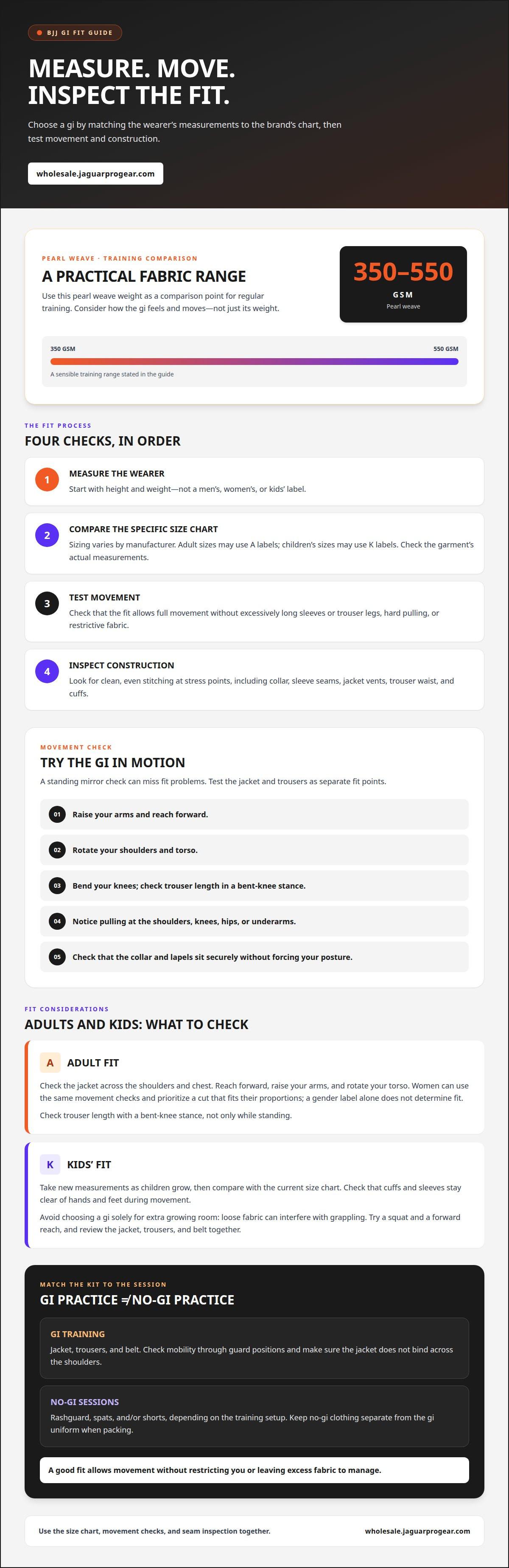
A gi combines a jacket, trousers, and belt for grappling sessions. Pearl weave balances structure with a fabric weight suited to regular training. A 350-550 GSM pearl weave is a sensible training range. Use that range as a comparison point, then consider how the gi feels during movement and repeated practice. The fabric should allow you to work through guard positions without the jacket binding across your shoulders.
Check the jacket and trousers as separate fit points. Raise your arms, rotate your shoulders, and bend your knees. Notice whether a sleeve limits your reach or trousers pull during a level change. Then test the collar and lapels: they should sit securely without forcing your posture. These movements can reveal fit problems that a standing mirror check misses.
Material and construction affect how bjj gear performs across training sessions. Inspect stitching at stress points, including sleeve seams, jacket vents, and trouser cuffs. Look for clean, even seams and fabric that moves with your body. A restrictive gi can interrupt movement, while excess fabric can get in the way during grips and transitions. Compare the garment with your training needs, not appearance alone.
Keep no-gi items separate from your gi uniform. Rashguards belong in your no-gi kit, while the gi jacket and trousers are for traditional practice. For example, pack the gi with its belt and place no-gi clothing in a separate compartment. This simple step makes it easier to bring the right kit to each session.
For a practical comparison, review BJJ gi options alongside your fit and fabric priorities. Start with the cut, check sleeve and trouser movement, then compare pearl weave weight against your training use.
Brazilian Jiu-Jitsu gis for men, women, and kids
Start with the wearer’s measurements, not a men’s, women’s, or kids’ label. Gi sizing varies between manufacturers, so compare height and weight with the specific size chart. For example, children’s sizes may use K labels, while adult sizes may use A labels. Use these categories to narrow your choice, then check the garment’s actual measurements. The right fit allows full movement without excessively long sleeves or trouser legs.
For adult athletes, check the jacket across the shoulders and chest. Reach forward, raise your arms, and rotate your torso. The sleeves should allow movement without pulling hard at the shoulders. Check trouser length with a bent-knee stance, not just while standing. Women can use the same movement checks and prioritize a cut that fits their proportions. A gender label alone does not determine the right fit.
For kids, take new measurements as they grow and compare them with the current size chart. Check that cuffs and sleeves stay clear of hands and feet during movement. Avoid choosing a gi solely to allow extra growing room, since loose fabric can interfere with grappling. Review the jacket, trousers, and belt together, then have the child try a squat and a forward reach.
Construction matters at every size. Inspect stitching at the collar, sleeve seams, trouser waist, and cuffs. Check that the fabric moves comfortably through a lunge and guard recovery. A premium label is no substitute for checking fit and construction. Match apparel to the training format: gi practice needs a jacket and trousers, while no-gi sessions may use a rashguard and grappling shorts. Separate the kits before packing so each athlete brings the right gear. Follow this order when choosing a size: measure, compare the chart, test movement, then inspect seams. It works for adults and children alike.
What health and hygiene risks come from wearing or sharing BJJ gear?
Shared BJJ gear can carry sweat, skin cells, and other residue between training partners. Grappling involves repeated close contact between clothing and skin. Damp fabric can also rub against areas already irritated by friction. Treat personal uniforms, rashguards, and towels as individual equipment. Avoid lending them, even when another athlete needs a spare layer.
After each session, separate worn clothing from clean gear. Put your gi, rashguard, shorts, and towel directly into a laundry load or designated wash bag. Don’t leave damp items bundled in a closed gym bag. Wash garments according to their care labels, then dry them fully before storage. This routine helps limit lingering moisture and odor between practices.
Check your skin after training, especially where a collar, sleeve, or waistband has rubbed. If you notice irritation, avoid sharing clothing or towels, and clean the affected gear before wearing it again. Keep cuts covered with an appropriate dressing during practice. Don’t use another person’s towel to wipe sweat or equipment. These steps reduce shared contact with skin and fabric residue.
Clean gear is only one part of a hygiene routine. Use a fresh towel for each session, store clean apparel separately, and wash training clothes promptly. Keep water bottles and personal-care items apart from shared matside supplies. If gear is still damp after washing, repeat the care process before packing it. A dedicated clean compartment in your gym bag makes it easier to keep items separate.
Set up a personal kit with a uniform and clean training layers for your sessions. Choose personal BJJ gear to keep your training apparel separate from shared equipment.
JAGUAR PRO GEAR - WHOLESALE – JAGUAR PROGEAR: Jaguar Organo - Pure Organic Cotton - Brazilian Jiu Jitsu BJJ Kimono Gi Uniform - Kids Adults Unisex IBJJF Compliant
JAGUAR PRO GEAR - WHOLESALE – JAGUAR PROGEAR offers gi options for practitioners choosing bjj sportswear for training or competition. The Jaguar Organo gi is made from pure organic cotton and is listed as IBJJF compliant. Its kids, adult, and unisex sizing makes it an option for different wearers.
For other preferences, compare the Jaguar Regular Blue gi or explore Custom Bjj Gis. Choose according to your fit priorities and whether you need a standard uniform or a customized option. The Exclusive Pearl Weave BJJ Hoodie Blue Unisex is another apparel option, but it is not a substitute for a competition gi.
Use the product range when you’re ready to compare gi choices against your training needs. Visit JAGUAR PRO GEAR - WHOLESALE – JAGUAR PROGEAR to review the options.
Set Up Your Next Gear Decision
Make future equipment choices easier by keeping a short fit note for each practitioner: record the size, how the sleeves and trousers move, and any adjustments needed. For a family or team, keep notes by wearer rather than relying on age or a general size label. These notes give you a practical reference when replacing a uniform or choosing a different cut.
Use the same approach for bjj sportswear across training needs. Record what belongs in each kit, then review the list before ordering. If your requirements point toward a standard gi or a customized option, take those details to JAGUAR PRO GEAR - WHOLESALE - JAGUAR PROGEAR. Contact JAGUAR PRO GEAR - WHOLESALE - JAGUAR PROGEAR to discuss your gear requirements and take the next step with a clear specification.
Frequently Asked Questions
How do I choose the right BJJ gi size?
Use the size chart for the exact gi model instead of transferring a size from another brand. Compare your height and weight with the chart, then check the jacket and trouser measurements if provided. If two athletes have similar measurements but different proportions, sleeve and trouser length can help identify their fit needs. Keep each person’s size notes separate for future replacements.
What Is BJJ Sportswear?
BJJ sportswear is clothing for Brazilian Jiu-Jitsu training and competition. It includes traditional gi uniforms, with jackets and trousers, and no-gi apparel such as rashguards, shorts, and spats. The right choice depends on the training format and event requirements. Think of it as a sport-specific clothing system, not one uniform for every session.
What clothing and gear are considered BJJ sportswear?
Typical BJJ clothing includes a gi jacket, trousers, and belt for gi practice, or a rashguard, shorts, and spats for no-gi sessions. A gym bag can also hold a clean towel and a change of clothes for after training. Keep clothing for each format together so you can pack the right setup for a gi class or no-gi practice.
How do I choose the right BJJ gi size and fit?
Compare measurements for the specific model, then check the garment in positions you use during training. For example, a tall athlete with a shorter torso should pay close attention to sleeve and jacket length. Don’t rely on age labels or a familiar size from another cut. Choose a fit that allows movement without excess fabric getting in the way.
What materials make BJJ sportswear durable and comfortable?
For a listed BJJ gi, the jacket uses a 400 GSM cotton-polyester blend pearl weave, with 10 oz canvas fabric trousers. Construction includes reinforced seams, rubberized collars, tapered sleeves, multiple waist loops, and a rope drawstring. The fabric is pre-shrunk for fit. Check comfort through shoulder and leg movement, and follow the care instruction: “Cold water wash only and hand dry with no shrinkage.”