

Jiu Jitsu Shirts for Training and Post-Training Comfort
The lowest-priced jiu jitsu shirts aren’t automatically the best value. Compare material, fit and construction, then choose a color and cut suited to training or post-training wear. These details affect comfort and how well a shirt holds up to regular use.
Fit matters: a shirt that feels comfortable off the mat may restrict movement during training. Consider sizing, fabric feel and durability, and how washing and care can help maintain the garment. Compare prices and colors alongside practical needs, not appearance alone, to make a choice that suits your use and routine.
Key Takeaways
- Use movement and fit as your guide when comparing shirt cuts, not appearance alone.
- Build a simple care routine around the garment’s care label to help maintain its condition.
- Compare fabric feel and construction to assess comfort and durability for training or post-training wear.
- Explore JAGUAR PRO GEAR - WHOLESALE - JAGUAR PROGEAR’s BJJ hoodies and custom gi options when you need gear beyond a standard shirt.
Washing and care
After training, separate a damp hoodie from clean gear and let it air out before washing. Sweat-soaked fabric folded in a gym bag traps moisture and odor. Wash the garment promptly when practical, especially after a hard session. Check the care label first; its instructions take priority over general washing advice.
Prepare the load before starting the machine. Turn the hoodie inside out to reduce friction on the outer surface and on printed or embroidered details. Close zippers, if present, and secure loose drawstrings so they don’t tangle with other garments. Wash dark colors together, apart from light fabrics. A new black hoodie, for example, belongs with similar dark items.
- Empty pockets and remove any detachable items before loading the washer.
- Sort by color and fabric weight; avoid washing a hoodie with rough items such as towels.
- Use a detergent suited to the care label and the garment’s color. Measure it according to the package directions.
- Select the wash cycle and water temperature shown on the garment label.
- Remove the hoodie after the cycle ends instead of leaving it damp in the machine.
Skip chlorine bleach unless the label specifically permits it. Strong products can affect color and surface details. Fabric softener may leave residue that changes how the fabric feels, so follow the garment instructions rather than adding it automatically. If odor remains after washing, check the care label and repeat an appropriate wash instead of masking it with fragrance.
Check the label before drying, too. Air-drying on a hanger or rack limits exposure to direct heat; use a dryer only if the label allows it. Keep the hoodie away from direct heat sources, and reshape the body and sleeves while damp. Don’t pull hard on wet seams or cuffs. Let the garment dry fully before folding or storing it.
Treat spot marks before washing the whole garment. Dab the area gently with a clean cloth and a suitable detergent solution, then follow the label’s cleaning instructions. Don’t scrub aggressively: abrasion can roughen the surface or disturb decoration. Store the clean, dry hoodie in a ventilated drawer or on a hanger. Sorting, label-led washing, careful drying and dry storage help keep training apparel ready to wear.
Athletic fit and freedom of movement
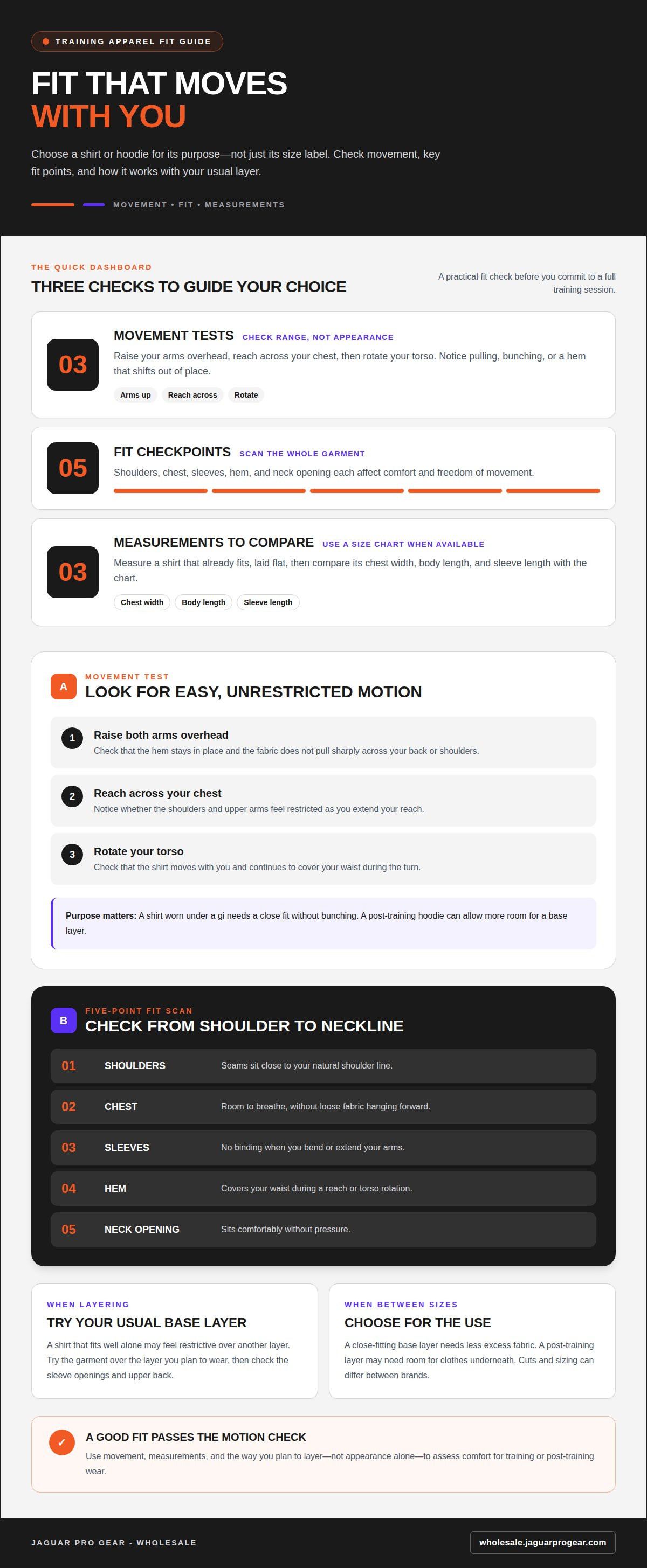
A comfortable training shirt should move with your shoulders, chest and arms. Start with the activity: drilling, warm-ups and post-training wear place different demands on a garment. A shirt worn under a gi, for example, needs a close fit without bunching. A hoodie worn after class can allow more room for a base layer. Match the cut to the purpose, not just the size label.
Use a movement test to assess fit. Raise both arms overhead, reach across your chest, then rotate your torso. Check that the hem stays in place and the fabric doesn’t pull sharply across your back or shoulders. Bend your elbows as if gripping a sleeve. Tightness at the upper arm can restrict your reach, while excess fabric may catch or fold during movement.
- Shoulders: Check that the shoulder seams sit close to your natural shoulder line.
- Chest: Look for enough room to breathe without loose fabric hanging forward.
- Sleeves: Confirm they don’t bind when you bend or extend your arms.
- Hem: Make sure it covers your waist during a reach or torso rotation.
- Neck opening: Choose a neckline that sits comfortably without pressure.
Layering changes the fit. Try the garment over the same base layer you plan to wear, such as a fitted training shirt beneath a hoodie. A shirt that fits well alone may feel restrictive over another layer. Check the sleeve openings and upper back first. These areas often show whether the combined fit allows easy movement.
Use your measurements to compare sizes when a chart is available. Measure a shirt that already fits, then compare its chest width, body length and sleeve length with the chart. Keep it flat while measuring. Don’t rely on a familiar size from another brand; cuts and sizing can differ. If you’re between sizes, decide based on how you’ll use the garment. A close-fitting base layer needs less excess fabric, while a post-training layer may need room for clothes underneath.
Fit also affects comfort after activity. A tight cuff or raised seam can feel more noticeable when you’re moving your arms or carrying a gear bag. Before wearing a new shirt for a full session, test its reach, rotation, and layering at home. For a post-training layer, review apparel options alongside your fit requirements.
Comfort and durability
Assess comfort by checking the areas that touch your skin. Run your hand over the inside surface, then inspect the neck, cuffs and side seams. A raised seam may rub beneath a backpack strap, while a stiff neckline can feel restrictive on the way home. Try the garment over your usual training layer. Consider whether its weight and surface feel suit your post-training routine.
Material descriptions can narrow your options, but check the label to understand what to expect. Review the fiber content and care instructions before comparing garments. Cotton and blended fabrics can feel different against the skin and may have different care needs. Don’t assume similar-looking hoodies will feel alike. If possible, handle the fabric and check its flexibility.
Durability starts with construction. Inspect stitching at stress points, including the shoulder seams, armholes, pocket openings and cuffs. Look for even stitching without loose threads or gaps. Gently stretch a seam and release it; check that it returns neatly without visible strain. Examine the zipper or drawcord, if present, and make sure it moves smoothly. These checks can reveal construction issues before regular wear.
- Surface: Check for loose loops, pulled threads, or uneven areas.
- Seams: Inspect joins at the shoulders and underarms for consistent stitching.
- Cuffs: Look for secure edges that sit comfortably around the wrist.
- Decoration: Review printed or embroidered areas for clean edges and secure attachment.
- Fit after wear: Note whether the body, sleeves, and neckline keep their shape.
Include the care label in your durability assessment. A hoodie is easier to maintain when its care instructions fit a routine you can follow consistently. Consider whether they suit your usual laundry setup. Don’t judge longevity by thickness alone. Fabric weight, construction, seams, decoration and care all affect how a garment performs over time.
Track wear in specific areas after regular use. Check the cuffs for fraying, the pocket corners for loose stitching, and printed details for cracking or lifting. Record when these changes appear, rather than relying on a vague impression. This gives you a practical basis for comparing future purchases. To compare apparel choices against your comfort and construction priorities, explore available gear options.
JAGUAR PRO GEAR - WHOLESALE – JAGUAR PROGEAR: Jaguar Organo - Pure Organic Cotton - Brazilian Jiu Jitsu BJJ Kimono Gi Uniform - Kids Adults Unisex IBJJF Compliant
JAGUAR PRO GEAR - WHOLESALE – JAGUAR PROGEAR offers BJJ apparel for training and post-training wear. For a layer after class, the Exclusive Pearl Weave BJJ Hoodie Blue Unisex directly suits this purpose. The Jaguar Organo gi is a separate option for practitioners looking for a pure organic cotton uniform. Choose according to whether you need a post-training layer or a gi, then compare the fit and care needs with your routine.
For a different uniform color, consider the Jaguar Regular Blue gi. Custom Bjj Gis offer a route for readers whose priorities include a custom gi. These are apparel choices, not substitutes for a training shirt. Contact JAGUAR PRO GEAR - WHOLESALE – JAGUAR PROGEAR or visit the website to explore the options.
Build a Practical Apparel Rotation
Decide what role each garment will fill before your next purchase. Treat jiu jitsu shirts as part of a training rotation, not interchangeable extras. Separate pieces for active sessions from those for travel, warm-ups or time after class. This makes it easier to spot gaps and avoid buying another item that serves the same purpose.
Write down your priority before comparing options: coverage, layering, team identity or color. Then assess suitable apparel against that need. For individual practitioners, this keeps the decision focused. For gym operators, coordinated colors can support a consistent team presentation. Keep the intended wearer and use in mind throughout the selection process.
A simple apparel record can help guide future choices. Note who uses each garment, its intended role and whether it remains in regular rotation. For a team order, organize preferences before choosing styles. Clear requirements make options easier to compare and help align purchases with actual use.
To discuss apparel and uniform options, contact JAGUAR PRO GEAR - WHOLESALE - JAGUAR PROGEAR. Set your priorities, choose with purpose, and move forward with gear suited to your routine.
Frequently Asked Questions
How much do jiu jitsu shirts typically cost?
Cost depends on garment type, fabric, construction, decoration and order quantity. Compare a basic training T-shirt and a heavier hoodie as separate categories: they serve different purposes and use different materials. For a fair comparison, match fabric and customization, then consider whether you’re buying one garment or placing a group order. These factors affect price more than color alone.